

close search
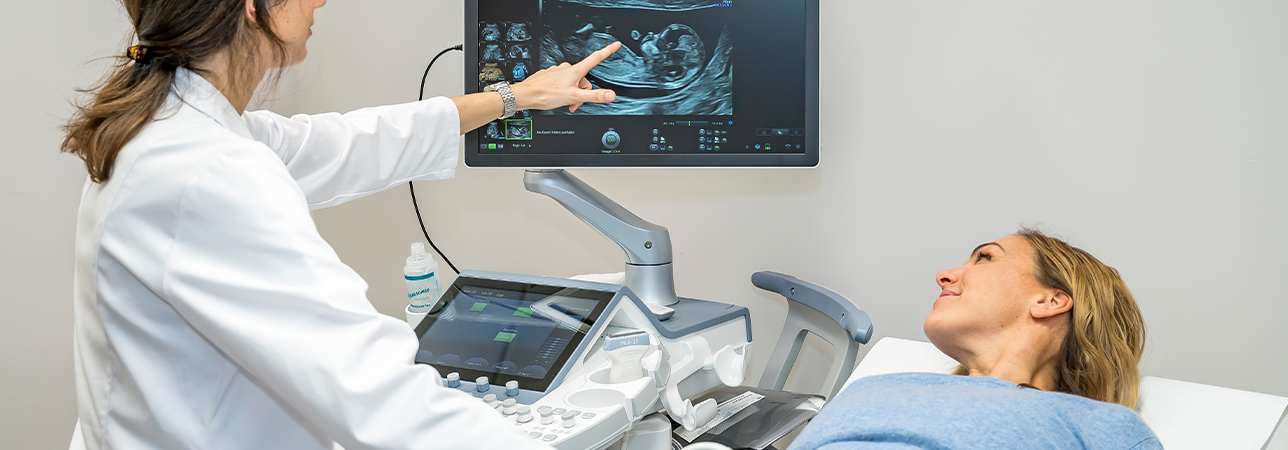
Many women still fail to attend their gynaecological health checks and early detection screenings on a regular basis. These are so important because they can help detect possible gynaecological diseases in good time, allowing them to be treated.
Depending on the age of the woman, it is possible to have special health checks carried out. These examinations focus on, for example, identifying and treating cancer and its precursors before the cancer spreads and becomes life-threatening.
The main purpose of health checks is therefore to increase the chances of the patient being cured.
A gynaecological examination includes a consultation on topics such as menstruation, hormone levels, sexual matters and contraception as well as a vaginal examination. It also serves to ensure the early detection of breast or cervical cancer. For example, a cervical swab is taken and the breast is check for lumps. Specific ultrasound examinations of the breast and abdomen may also be considered.
It is recommended that women attend these check-ups at the specified intervals. Aside from regular check-ups, these kinds of examinations are always also carried out when certain symptoms are already present and they need to be clarified in more detail. As a general rule, gynaecologist visits for the early detection of certain illnesses should be carried out at least once a year from the age of 20. As part of mammography screening programmes, all women over the age of 50 are also invited for a mammogram.
Ultimately, however, the frequency of visits to a gynaecologist depends on a woman’s individual risk of disease. For example, it is important for a patient to inform their gynaecologist if, for example, there is an increased incidence of cancer in their family. In this case, the treating doctor will discuss with the patient the intervals at which a gynaecological assessment would be advisable.
The gynaecological examination is primarily a preventive health check, which means that a woman undergoes screening even though her body does not show any signs of illness. However, if a woman is experiencing symptoms or has concerns, she should make a specific appointment with her gynaecologist.
Symptoms that are often the reason for a gynaecological examination include:
The causes of the symptoms listed above are manifold. Diseases that may cause them include:
Before the actual physical examination begins, the patient is first asked to hand in a urine sample. The doctor then uses a special test strip to examine the urine for germs, blood or signs of inflammation. The presence of pregnancy can also be checked for by means of a urine test. In addition, an empty bladder makes the subsequent ultrasound examination easier.
In the next step and before the physical examination begins, the gynaecologist asks the patient about any possible symptoms and clarifies whether the patient’s immediate family has already had an increased incidence of breast cancer or cervical cancer in order to obtain possible indications relating to the family history. Additional discussions may include:
The patient is asked to remove her clothing from the waist down and take a seat in the gynaecological examination chair.
As part of the vaginal examination, the gynaecologist performs a smear test known as the Pap test (also: cytological smear) for the early detection of cancer.
To do this, the doctor carefully removes individual, superficial cells from the cervix (the portio surface) using a spatula and a small brush from the cervical canal. The sample is then sent to a cytological laboratory. In the case of abnormal Pap findings, i.e. findings based on cell changes, precursors or even cancer cells, further investigations and examinations are necessary.
At the end of the vaginal examination, an ultrasound examination is usually carried out using a special transducer which is coated in gel.
This is rod-shaped, allowing it to be inserted easily and painlessly into the vagina, giving the gynaecologist the opportunity to assess the wall and mucous membrane of the uterus, the cycle phase, the ovaries and the spaces of the lesser pelvis.
Once the patient has got dressed again, the gynaecologist will carry out a final breast examination. This is a palpation of the breasts with the aim of detecting any pain that may be present and feeling any lumps or hardening. As a rule, the doctor then shows the patient how she can regularly examine her breasts herself so that any changes can be detected at an early stage.
From a certain age or if the gynaecologist deems a further investigation necessary, an X-ray examination of the breast, known as mammography, may also be ordered. This is a simple, quick X-ray examination of the female breast, which only takes a few minutes. The images (mammograms) can then be used to assess the normal, age-dependent condition of the breast and to distinguish this from pathological changes. In this case, tumours that cannot be felt with bare hands can be detected at an early stage.
Mammography is recommended every two years as part of a screening programme for early detection of breast cancer from the age of 50.
After every visit to a gynaecologist, it’s a good idea to check your own breasts about once a month – just as your doctor has suggested.
Self-examination is easiest between the third and seventh days after the start of menstrual bleeding, as the mammary gland tissue is particularly soft at that time, which is why tissue changes are more noticeable.
An examination of young girls is necessary in the following cases, although an external examination of the genital organs is usually sufficient, which is why the vaginal palpation can be omitted:
The medical term “smear” refers to the removal of the body’s own material from the surface of wounds or mucous membranes by means of a sterile cotton swab, small brushes or small spatulas for microbiological and/or cytological diagnostics, i.e. the analysis of cell material for the detection of diseases or cell changes. The swab used as part of the gynaecological examination is called a Pap test.