

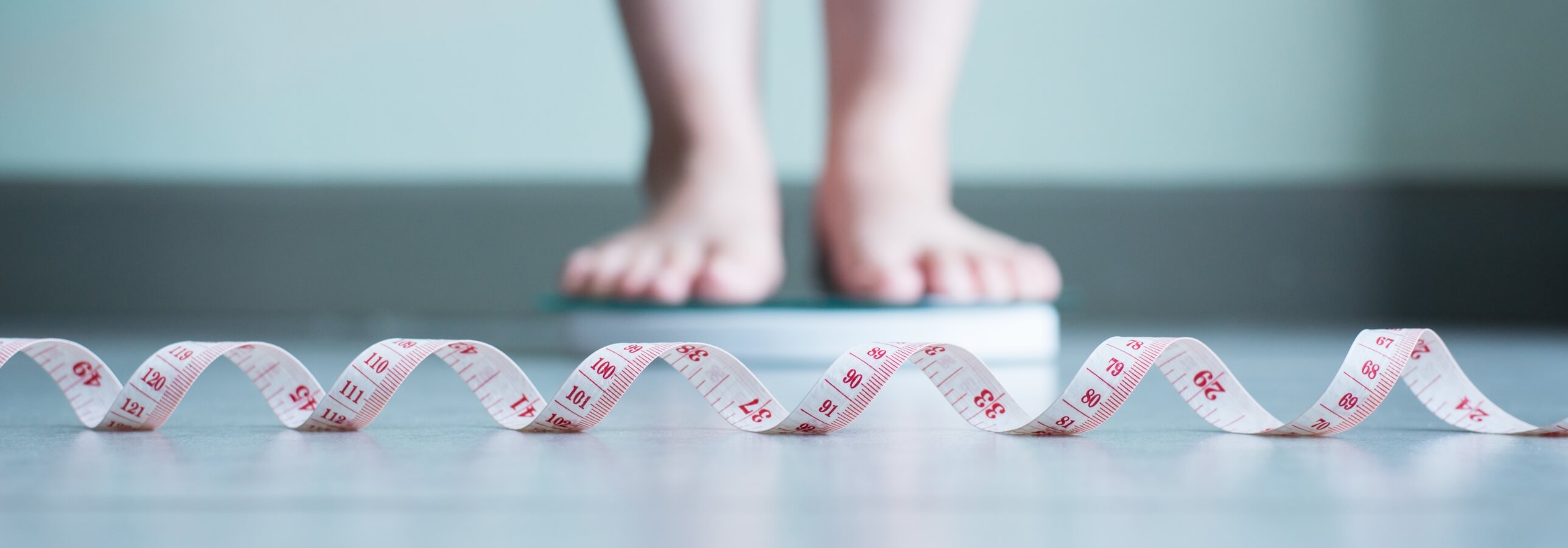
Obesity and overweight
Obesity is when the amount of fat in the body is excessive. Obesity is a chronic disease that promotes other diseases. For example, the risk of developing type 2 diabetes or cardiovascular problems is many times higher for someone who is obese.
Obesity occurs when more energy is consumed through food than the body can process. This means that the high food intake is almost always accompanied by too little physical activity. Psychological and genetic reasons also play a role.
Causes
There are various risk factors for developing obesity, including for example:
- Metabolic diseases
- Not smoking
- Lack of sleep
- Stress
- Pregnancy
- Wrong diet
- Medication
- Metabolic diseases
BMI calculator
The Body Mass Index calculator is an index defined by the WHO and can be an indication of obesity. The BMI provides information about the relationship between height and weight, and age also plays a role in the calculation. It is calculated by dividing the weight by the height squared. The Body Mass Index (BMI) ranges on a scale from 18.5 (underweight) to over 40 (overweight grade 3).
Calculate your personal BMI directly here and find out in which range you are.
Body Mass Index Calculator
| Weight (kg): | |
| Height (cm): | |
BMI: -
More information about the BMI
BMI Table
| BMI | Weight |
|---|---|
| Under 18.5 | Underweight |
| 18.5 - 24.9 | Healthy weight |
| 25.0 - 29.9 | Overweight |
| 30.0 - 34.9 | Obesity Level 1 |
| 35.0 -39.9 | Obesity Level 2 |
|
over 40 |
Obesity Level 3 |
*according to WHO
BMI Results
The BMI always has to be read in its context, the age plays an important role. Generally speaking the BMI according to the WHO has four main categories:
- Underweight
- Healthy weight
- Overweight
- Obesity
Inside those categories are different level of severities, all in all there are 11 different weight results.
BMI and Age
The BMI is influenced by age. Especially children and young adults are still growing, and body development can vary heavily between children thus it is not recommended to use the BMI for children and teenagers. In addition, with age, the body's fat content changes drastically and thus the BMI range changes with age.
| Age | optimal BMI |
| 19-24 | 19-24 |
| 25-34 | 20-25 |
| 35-44 | 21-26 |
| 45-54 | 22-27 |
| 55-64 | 23-28 |
Treatment
The most important part of treatment are lifestyle changes, with the help of calorie-reduced diets and regular physical activity.
Physiotherapy and nutritional support also play an important role.
Physiotherapy
Physiotherapy care is not about burning calories, but about rebuilding a more relaxed relationship with your body.
We want to help you:
- Feel your body better and enjoy moving it
- Improve your mobility
- Increase your physical activity by changing your lifestyle habits
Individually or in a group, we offer you weekly care that is tailored to your physical abilities. Our physiotherapists adapt the programme to your abilities and personal situation and help you find the motivation you need!
Our team of physiotherapists regularly attends training courses to keep up to date with new practices and to be able to use them in a meaningful way.
Dietary - nutritional care
Diets make you fat - so why continue down this path? Our method pays direct attention to your eating behaviour and your environment.
We advise and accompany you.
- Interpret your eating feelings correctly and make the right decision (hunger, satiety).
- Learn how to enjoy eating without guilt.
- Establishing routines
- Illumination of emotional influences
Classes in the group - workshops
Our support is carried out in group sessions. In regular workshops, participants exchange ideas and discuss various topics, for example:
- Sensations when eating
- Dealing with emotions
- Relationship with the body
- Obstacles to change.
The aim is to be able to talk freely about everything and not feel guilty. Talking is the most important remedy, whether you are obese or overweight.