
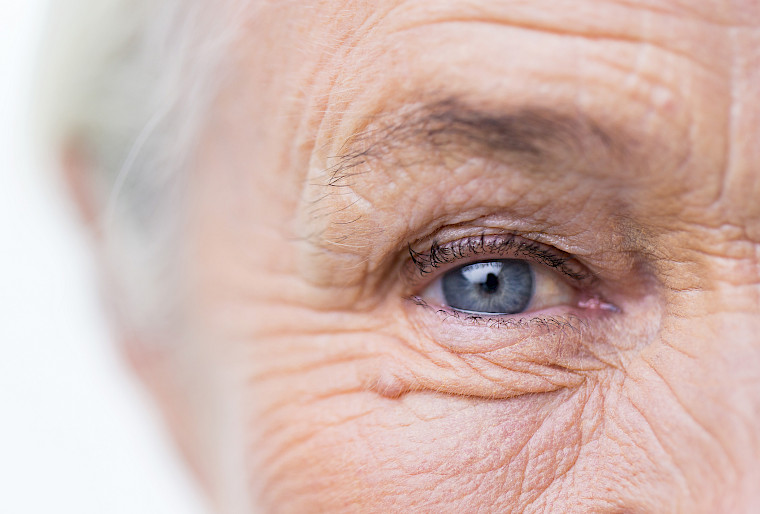
- Around one in three people over the age of 75 is affected by AMD
- The leading cause of visual impairment in people over 50 in industrialised countries
- Four educational videos available

Macular degeneration
Understanding AMD to help prevent and treat it more effectively. Our educational videos and explanations guide you through every step.
The two forms of AMD
The macula is the central part of the retina that enables us to see fine details, read, recognise faces and perceive colours. AMD is an age-related condition that gradually damages this area and impairs central vision. It can progress slowly (dry or atrophic form) or more rapidly, with the development of abnormal blood vessels beneath the retina (wet or neovascular form).
Age-related macular degeneration (AMD)
This early stage is characterised by the presence of yellowish deposits, known as drusen, and changes in the deepest layer of the retina and the pigment epithelium, sometimes without any visual symptoms. Regular monitoring is essential at this stage.
Atrophic (dry) AMD
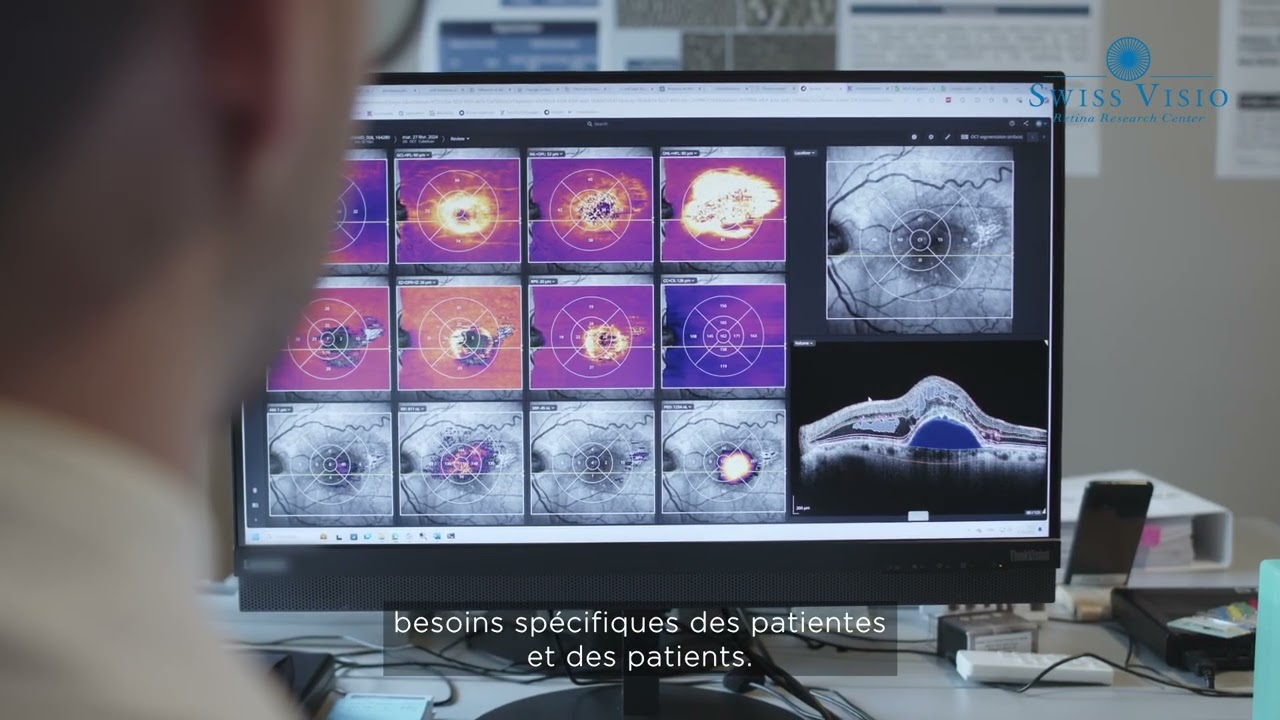
The photoreceptor cells and pigment epithelium cells of the macula gradually disappear, leading to a thinning of the retina and a slow but irreversible loss of vision
Exudative (wet) AMD
New, abnormal blood vessels originating from the vessels beneath the macula – the choroid – penetrate the membrane separating it from the pigment epithelium and leak beneath or into the retina, causing a relatively rapid, though rarely sudden, loss of vision.
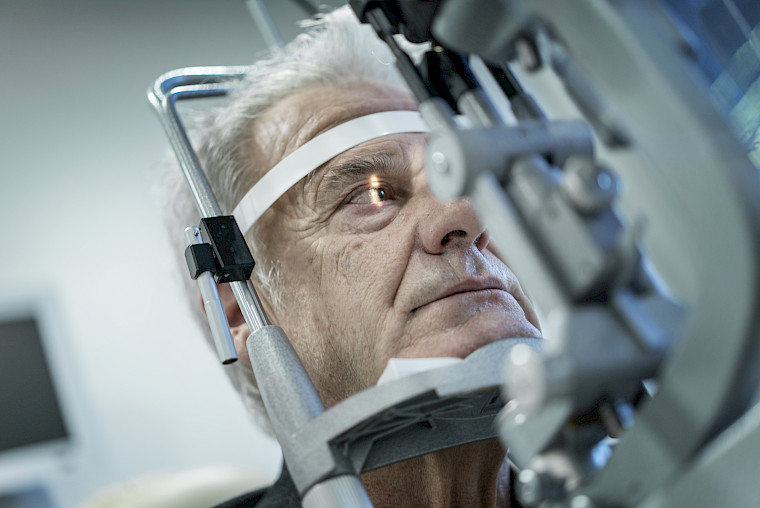
Symptoms by stage
Early stage
No noticeable symptoms in everyday life. The first changes to the retina are usually only detected during an eye examination.
Intermediate stage
Vision that is sometimes less clear, a need for more light when reading, difficulty adapting to dim lighting when reading, and difficulty adapting to rapid changes in lighting.
Advanced stage
The appearance of a blurred or dark spot in the centre of your vision, distortion of straight lines, and difficulty reading, driving or recognising faces.
Treatments

Prevention
Adopting a healthy lifestyle can help reduce the risk of AMD: giving up smoking, eating a diet rich in antioxidants (fruit, vegetables and fish), taking regular exercise, protecting your eyes from UV rays and, in some cases, taking dietary supplements recommended by your ophthalmologist.

Wet AMD — Anti-VEGF injections
Intravitreal injections administered at regular intervals block the growth and leakage of abnormal blood vessels beneath the retina, helping to stabilise vision and, in some cases, improve it.

Dry AMD — Treatments and Research
Some recent treatments can slow the progression of dry AMD, but they cannot restore lost vision. Research is progressing rapidly and new treatment approaches are being developed — consult your specialist regularly.