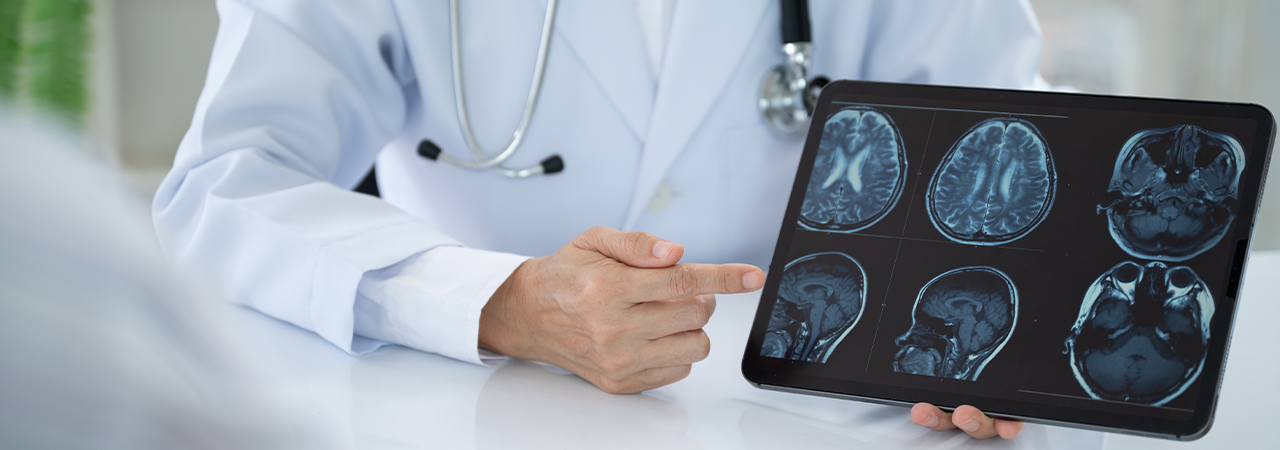
Doctor shows a scan of a head injury

Head injuries

A head injury occurs following a blow to the head, whether mild (concussion), moderate or more severe. It can lead to physical, cognitive, emotional or behavioural consequences requiring appropriate care.

Prompt and appropriate care is essential to minimise complications. Our multidisciplinary team, comprising neurologists, specialists in physical medicine and rehabilitation, and neuropsychologists, ensures an accurate diagnosis and personalised care throughout the recovery process.

What is a head injury?

A head injury is damage to the brain, the surrounding structures or the skull, caused by a direct or indirect blow to the head. It can be caused by a fall, a road traffic accident, a sports accident or any other event resulting in an impact to the head.

  • Mild head injury (often referred to as a concussion) is the most common type and, in the majority of cases, shows no visible damage on imaging.
  • Moderate to severe head injury can lead to prolonged loss of consciousness, brain damage and may require hospitalisation, sometimes in intensive care.

Management depends on the initial severity – assessed in particular using the Glasgow Coma Scale – the duration of post-traumatic amnesia, and the clinical course in the hours and days that follow.

Symptoms

The symptoms of a head injury can vary from person to person. They may appear immediately after the accident or develop gradually over the following hours or days:

  • Persistent headaches
  • Nausea or vomiting
  • Dizziness or loss of balance
  • Confusion, difficulty concentrating or memory problems
  • Loss of consciousness, even if brief
  • Unusual drowsiness or difficulty staying awake
  • Vision problems (double vision, blurred vision)
  • Sensitivity to light or noise
  • Mood swings, irritability
  • In severe cases: seizures, weakness in a limb, speech difficulties

Any loss of consciousness or worsening of symptoms in the hours following the impact requires urgent medical attention.

Our multidisciplinary approach


Rehabilitation following a head injury is based on a comprehensive assessment of the patient’s needs and coordinated care provided by a team of specialists:

  • A&E: initial clinical and neurological assessment
  • Radiology: brain imaging (CT scan, MRI) to assess any lesions
  • Neurology/ Neurosurgery: in-depth diagnosis and, if necessary, surgical management
  • Physical Medicine and Rehabilitation: coordination of the rehabilitation programme and overall functional monitoring, support with returning to work and pre-injury activities
  • Neuropsychology: assessment of cognitive functions in cases of persistent difficulties, teaching of compensatory strategies
  • Speech and Language Therapy: management of language, speech and swallowing disorders
  • Physiotherapy and Occupational Therapy: support with functional rehabilitation and practical training in activities of daily living

This coordinated approach enables care to be tailored to each patient, from discharge from A&E through to the resumption of daily activities.

Patient journey

Every head injury is different, and the treatment provided is tailored to the severity of the injury and the progression of symptoms. From the initial assessment right through to a return to everyday activities, our teams support you every step of the way:

1. Initial assessment and diagnosis

Following an injury, an initial clinical and neurological assessment is carried out to evaluate the patient’s condition, identify any injuries and determine the severity of the injury. This assessment may be carried out in A&E or during a specialist consultation. Further tests, such as brain imaging, may be prescribed where necessary.

2. Referral and medical care

Based on the results of the assessment, the medical team determines the most appropriate course of treatment: outpatient care, hospitalisation or specialist treatment. Decisions are made on the basis of the patient’s symptoms, their clinical progress and medical recommendations.

3. Assessment of sequelae and setting rehabilitation goals

Where symptoms persist, a thorough assessment helps to identify any physical, cognitive, emotional or behavioural difficulties. On this basis, personalised goals are set in consultation with the patient and their family and friends in order to develop a tailored rehabilitation programme.

5. Coordinated follow-up and return to everyday life

Throughout the treatment process, the professionals involved work together to tailor care to the patient’s progress. Follow-up appointments and further assessments may be carried out to monitor progress. Where possible, the team supports the patient in resuming their family, social and work commitments, with a view to promoting long-term independence.

Are you interested in a rehabilitation stay at the Clinique Valmont?

Please do not hesitate to contact us; our admissions department will be happy to answer any questions you may have.

+41 21 962 37 40

admissions@cliniquevalmont.ch

Admission questionnaire