
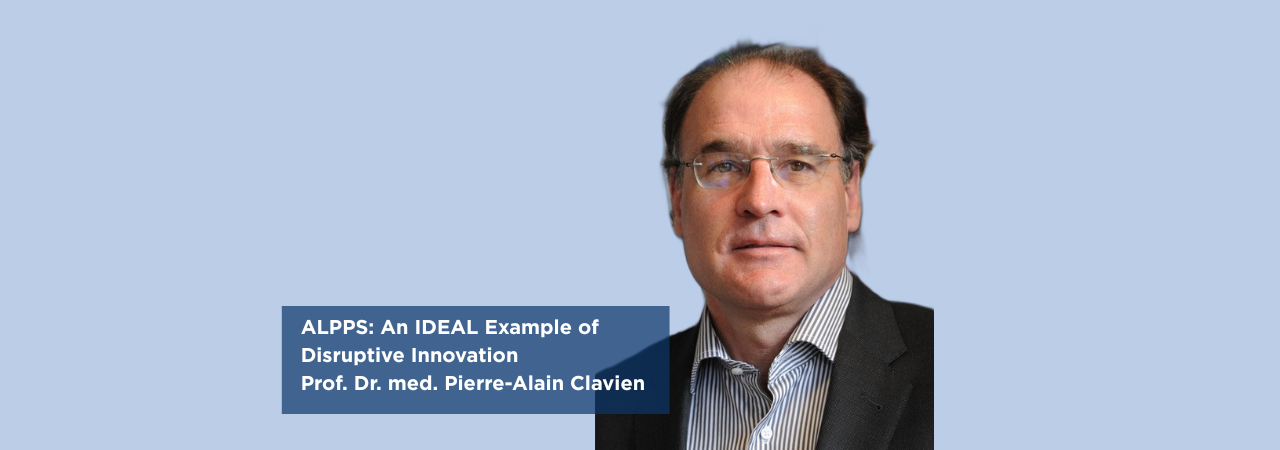
How surgical innovation can be successfully achieved
International study shows how new surgical methods can be developed in a structured and safe manner. The paper "Assessing Surgical Innovation: ALPPS – An IDEAL Example of Disruptive Innovation" was presented at this year's annual meeting of the European Surgical Association in Geneva and will be published in the November issue of the journal Annals of Surgery.
Surgical innovation is a key driver of medical progress. New surgical techniques can save lives, but they also carry risks if they are used too early or without sufficient scientific testing. An international research group led by Professor Pierre-Alain Clavien from the University of Zurich, Hub for Translational Research and Liver/GI Health and the Swiss Medical Network (Bethanien Private Hospital, Zurich) is now using a new, complex liver operation to demonstrate how surgical innovations can be safely introduced through a step-by-step, transparent approach.
The study focuses on the IDEAL model, a structured concept for evaluating surgical innovations developed at the University of Oxford. It describes how new surgical procedures should be systematically tested in five phases, from the initial idea to established clinical routine. The aim is to ensure patient safety and scientific quality.
Five phases of innovation
The IDEAL model divides the innovation process into the following steps:
- Idea: Development of a theoretical concept and justification of feasibility.
- Development: Initial practical applications and technical adjustments.
- Exploration: Collection of clinical experience and establishment of registries.
- Assessment: Comparison with established procedures in controlled studies.
- Long-term study: long-term observation and review of results in everyday clinical practice.
This approach is intended to help ensure that new surgical methods are developed in an evidence-based and transparent manner before they are used in widespread care.
ALPPS as an example of structured innovation
A clear example is provided by the ALPPS technique (Associating Liver Partition and Portal Vein Ligation for Staged Hepatectomy), which was developed in large part at the University Hospital of Zurich and further developed in close international cooperation. The two-step surgical procedure enables operations to be performed on patients with extensive liver tumours that were previously considered inoperable, by first stimulating rapid growth of healthy liver tissue and then removing the tumour in a second step.
After initially high complication rates, ALPPS was systematically reviewed and improved based on the IDEAL model. The basis for this was initially an international registry led by Zurich, which collected clinical data worldwide and identified risks. This was followed by three key instruments:
- an international consensus conference that defined uniform recommendations for indications, techniques and safety,
- a randomised controlled study that compared ALPPS with conventional surgical methods and objectively demonstrated its effectiveness,
- and a benchmarking project that established quality standards and made the results of experienced centres available as reference values for worldwide practice.
This combination of data collection, scientific evaluation and quality measurement enabled a significant reduction in mortality and the safe application of the technique. Today, ALPPS is considered an example of how surgical innovation can be implemented responsibly through international cooperation. Another historical example is the development of laparoscopic cholecystectomy and, currently, robotic surgery.
A model for the future of surgery
The study emphasises that sustainable progress in surgery is based on global cooperation. Shared data platforms, standardised analyses and transparent communication between clinics create the basis for making innovations safe and traceable. The IDEAL model serves as a practical tool – not as a rigid set of rules, but as a guide for the responsible development of new procedures.
