PRP, or Platelet-Rich Plasma, is a concentrate of platelets obtained from the patient's own blood.
Platelets are best known for their role in blood clotting. They also contain growth factors and various biological molecules involved in tissue repair and regeneration processes.
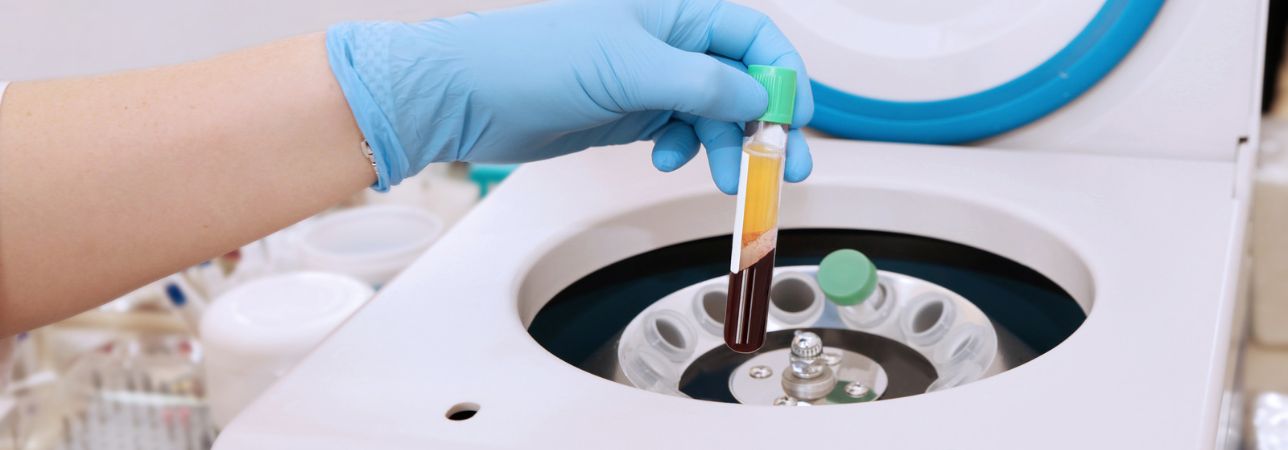
The treatment involves a simple procedure: a small amount of blood is drawn from the patient and centrifuged to isolate a fraction particularly rich in platelets. This concentrate is then injected into the area requiring treatment.
As PRP is prepared from the patient's own blood, it is considered an autologous treatment, which helps minimise the risk of immune reactions.
PRP is primarily used to treat certain conditions affecting the joints, tendons and surrounding structures, including:
Knee osteoarthritis
Chronic tendinopathies (including conditions such as tennis elbow)
Certain types of chronic joint pain
The treatment generally involves several steps:
A small amount of blood is drawn from the patient, just as during a routine blood test.
The blood sample is placed in a centrifuge to separate its various components and obtain plasma with a high platelet concentration.
The PRP is then injected into the affected area. Depending on the indication and the location of the injection, ultrasound guidance may be used to ensure precise administration.
The procedure is generally performed on an outpatient basis and does not require hospitalisation.
The aim of PRP is to stimulate the body's natural biological mechanisms involved in tissue repair and, for certain indications, help reduce pain and improve mobility.
Potential benefits include:
Reduced pain in certain conditions
Improved joint or tendon function
It is important to note that the effectiveness of PRP varies depending on the condition being treated. Results may differ from one patient to another.
Clinique Valmont
Route de Valmont 22
1823 Glion sur Montreux