
Solar Eclipse: A Sight Not to Be Taken Lightly
Safely viewing the August 12 partial eclipse without risking your sigh
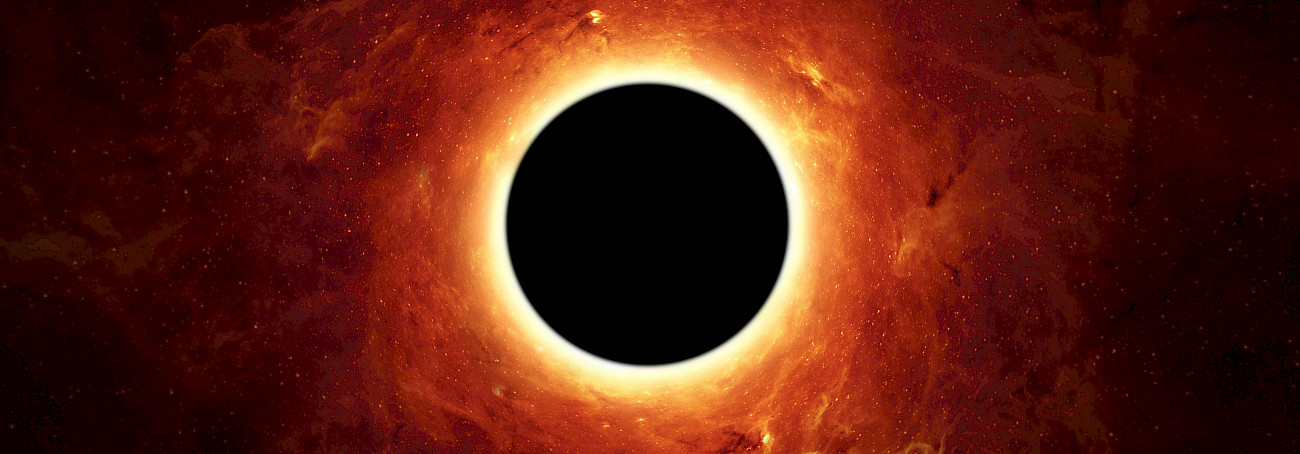
A solar eclipse is a rare and spectacular phenomenon… but looking at the Sun without proper protection can cause irreversible retinal damage.
During the 1999 eclipse in France, the Institut de veille sanitaire, in collaboration with the Sentinelles Urgences network, collected data from 5,400 ophthalmologists and 500 emergency departments. The findings reported 253 eye injuries, including 147 retinal burns. Of these, 17 cases were severe, with visual acuity below 2/10, including 7 bilateral cases. 93% of the retinal burns occurred while the eclipse was only partial. Among those affected, 106 people had looked at the phenomenon with the naked eye, and about twenty had used unsuitable means (welding glass, colored glass, sunglasses…).
What is a solar eclipse?
A solar eclipse occurs when the Moon passes between the Sun and the Earth and blocks part of the solar disk.
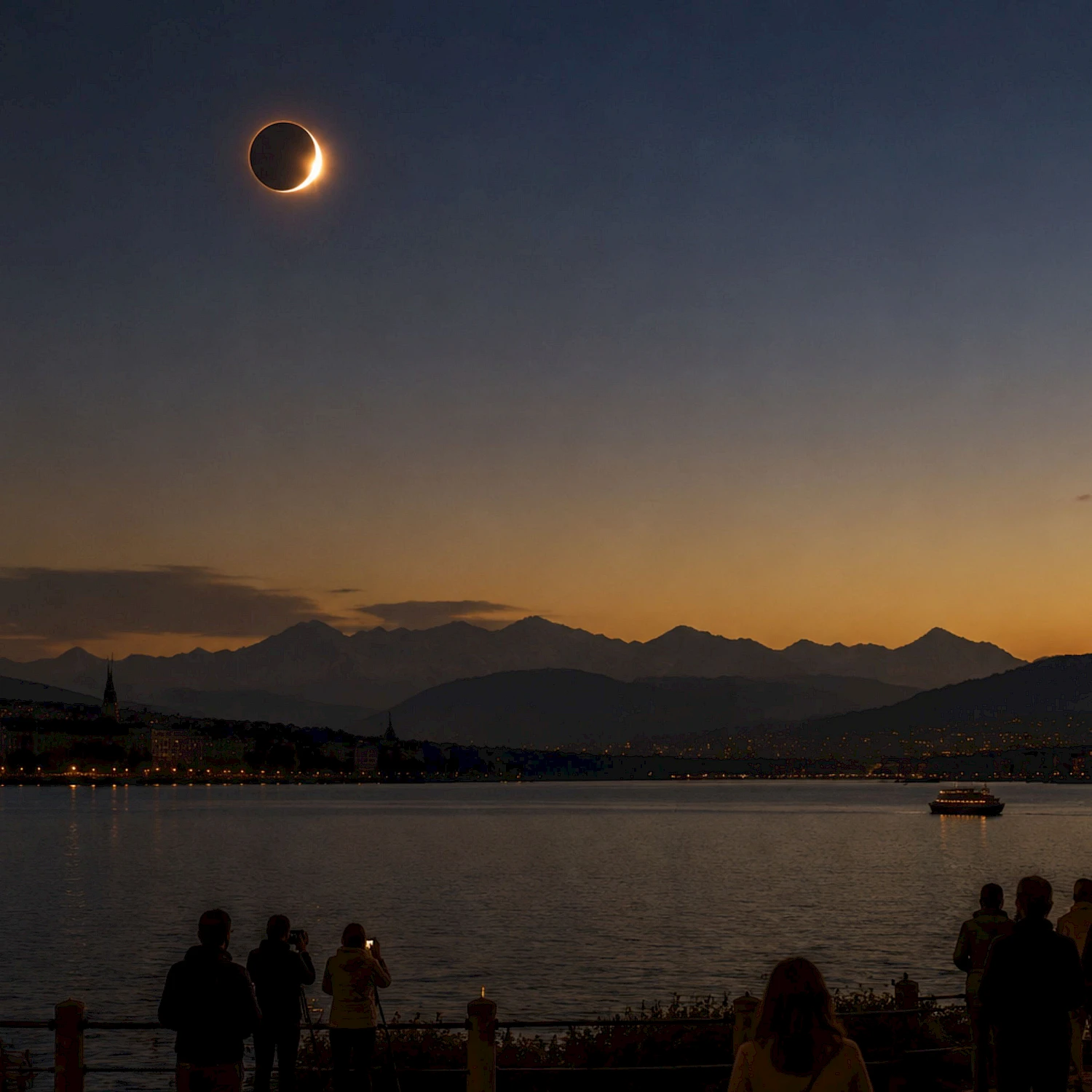
On August 12, a partial solar eclipse will be observable from Switzerland. The peak of the eclipse will occur between 8:15 and 8:20 PM depending on the region. At that point, the Moon will cover approximately 90% to 93% of the solar disk, depending on your location. Even when the Sun is partially covered, the remaining solar radiation is enough to damage the retina.
What happens inside the eye?
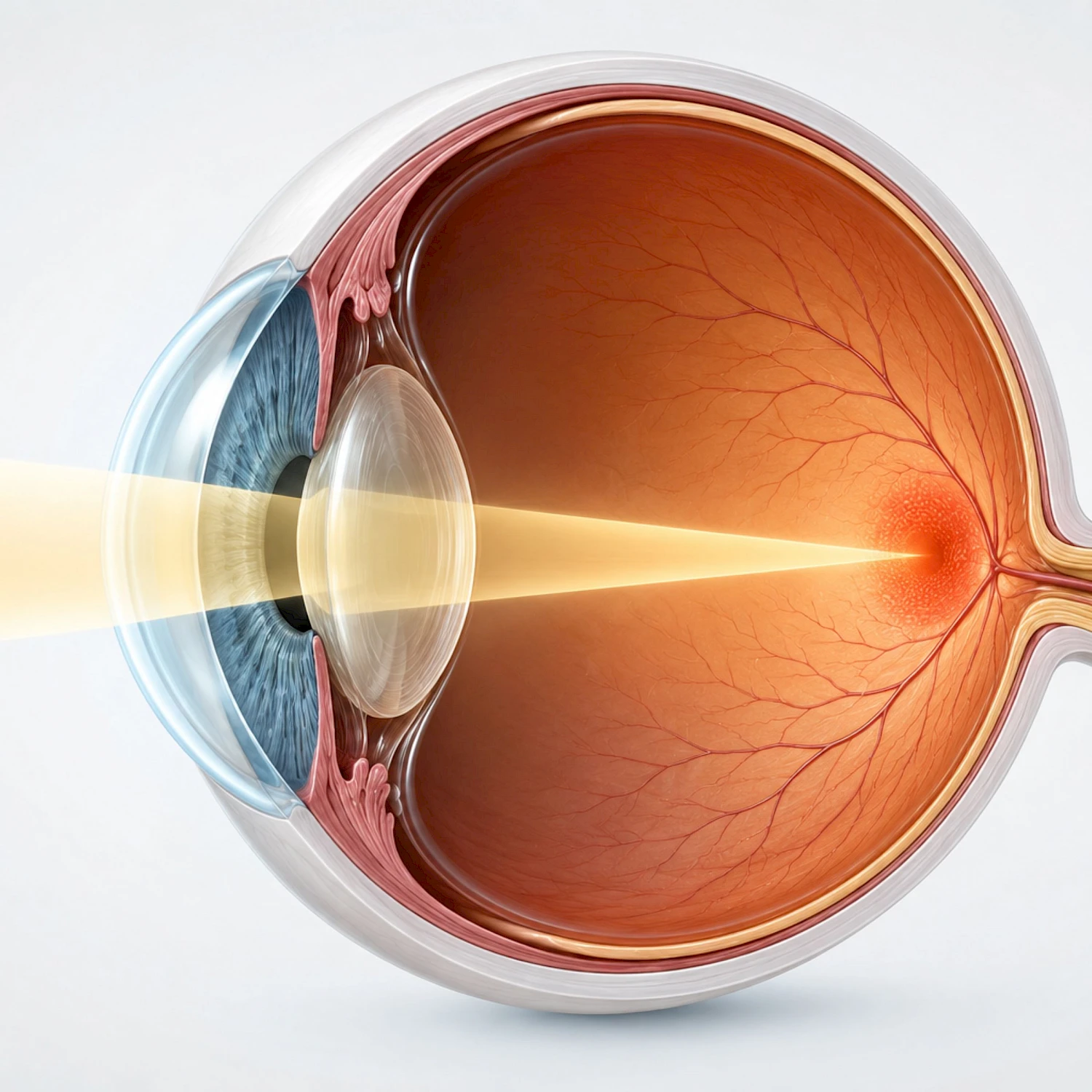
The cornea and lens focus light rays onto the retina, particularly on the macula, the area responsible for sharp, detailed vision.
Direct exposure to the Sun can cause solar retinopathy. Intense light radiation triggers a photochemical reaction that can damage the photoreceptors and the retinal pigment epithelium, two elements essential to proper retinal function. This damage can be irreversible.
Why is it particularly deceptive to look at the Sun during an eclipse?
Several factors can create a false sense of safety:
You may go home feeling no discomfort at all, only to discover, hours later, a spot in the center of your vision.
What are the symptoms?
Symptoms of solar retinopathy are usually not immediate. They can appear several hours after exposure, sometimes the next day.
These may include:
Partial recovery is sometimes possible within weeks to months, but permanent damage may remain. There is currently no treatment able to repair permanent macular damage.
Solar retinopathy does not typically cause total blindness: peripheral vision is preserved. However, macular damage can significantly affect daily activities such as reading, writing, driving, or recognizing faces.
What does NOT protect your eyes
Never look at the Sun through:
Looking directly at the Sun with the naked eye, even for a few seconds, is dangerous.
So how do you protect your eyes?
The only solution is to use solar protection specifically designed for eclipse viewing.
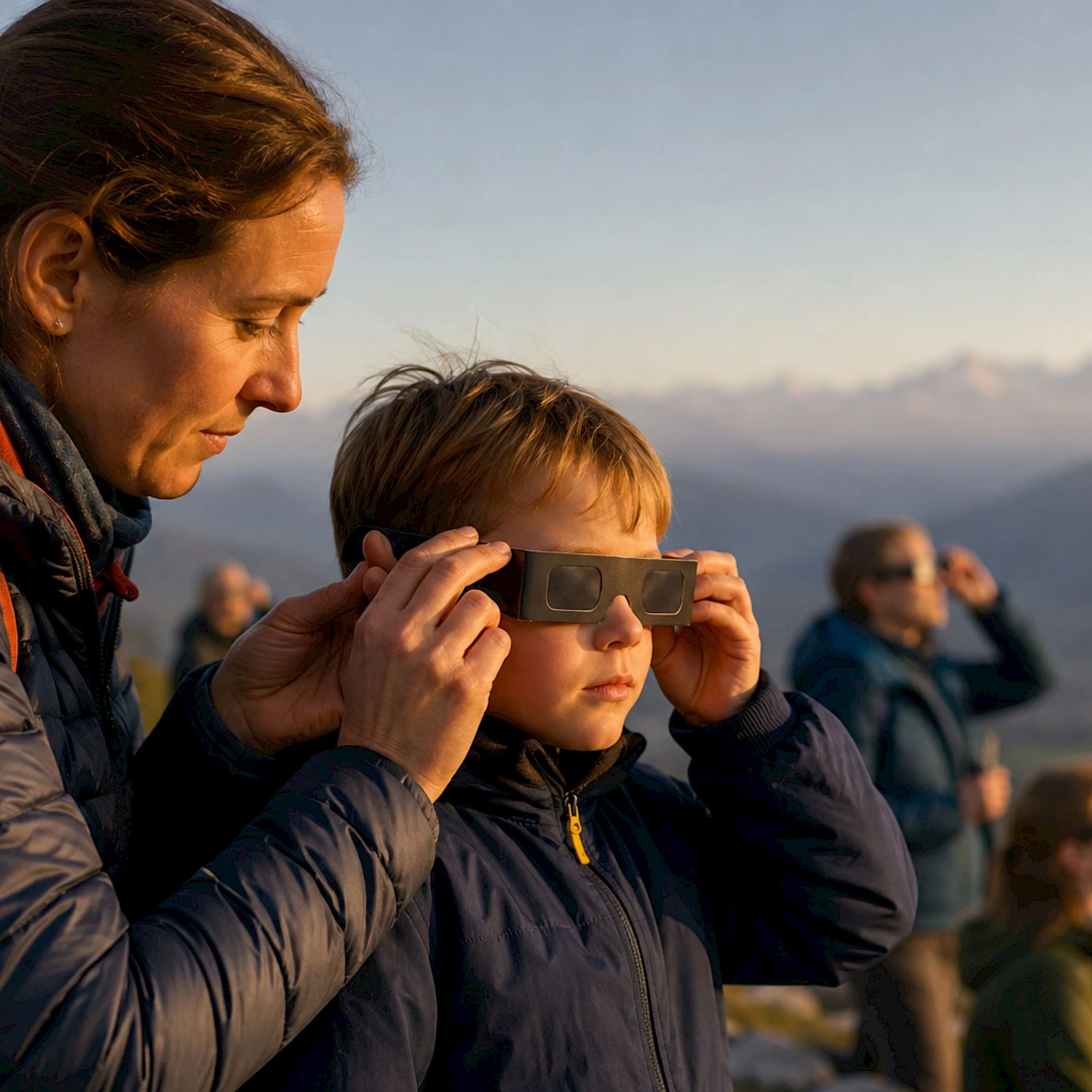
Wear eclipse glasses that comply with the ISO 12312-2 standard and carry the CE marking, in perfect condition: they must be new or in excellent shape, with no scratches, tears, punctures, or other damage.
An important distinction:
Only look at the Sun with this appropriate protection, and follow the manufacturer's instructions for use.
What about children?
Close supervision of children is essential, as they may spontaneously remove their eclipse glasses or look at the Sun outside of supervised periods.
In the event of accidental exposure followed by decreased vision, a central spot, or visual distortion, consult an ophthalmologist promptly.
Key takeaways
Enjoy the show… without losing your sight!
Written by Dr. Victoire Hurand, August 2026
