
Cauda Equina Syndrome: When Lumbosciatica Becomes a Medical Emergency
Low back pain and sciatica are among the most common reasons for seeking care in primary care. In most cases, these are benign conditions that can initially be managed with conservative treatment. However, there are situations in which low back pain or radicular pain must be quickly recognized as a potential neurosurgical emergency.
One of these is cauda equina syndrome.
What Is Cauda Equina Syndrome
The cauda equina is the bundle of lumbar and sacral nerve roots located in the lower part of the spinal canal.
Acute compression of these nerve roots can cause significant neurological symptoms, particularly affecting perineal sensation, urinary and bowel function, sexual function, and strength in the lower extremities.
The most common cause is a large lumbar disc herniation, but cauda equina syndrome can also be caused by severe stenosis, tumors, infections, hematomas, or trauma.
Why early recognition is important
Cauda equina syndrome is rare but potentially serious.
The main concern is the risk of permanent deficits, particularly in bladder, bowel, sexual, and motor function. For this reason, early recognition of symptoms and prompt performance of a lumbar MRI are essential.
International guidelines agree that, in cases of clinical suspicion, an MRI should be performed urgently. The diagnosis should not be based on a single clinical sign, as symptoms may be incomplete or in their early stages.
Symptoms to Actively Look For
Cauda equina syndrome can present with obvious symptoms, but it can also present with more subtle initial symptoms. It is therefore important to ask targeted questions, especially in patients with severe, bilateral lumbosciatica or lumbosciatica associated with neurological deficits.
- The main symptoms to look for are:
- severe low back pain, often associated with sciatica;
- bilateral sciatica or pain radiating to both legs;
- altered sensation in the perineal region or “saddle” numbness;
- difficulty initiating urination;
- reduced sensation during urination;
- urinary retention or incontinence;
- new-onset bowel disturbances;
- sexual dysfunction;
- progressive weakness in the lower extremities.
The most suggestive symptoms are a combination of urinary or bowel disturbances, altered perineal sensation, and radicular pain, especially if bilateral. Recent recommendations emphasize that even subjective symptoms, in the absence of clear objective signs, may warrant an urgent MRI.
Caution: Do not wait for complete urinary retention
A common mistake is to wait for the onset of complete urinary retention before referring the patient.
In reality, cauda equina syndrome can begin with more subtle symptoms:
weaker urinary stream;
need to strain to urinate;
sensation of incomplete bladder emptying;
reduced sensation of urine flow;
altered genital or perineal sensation.
These symptoms must be taken seriously, especially if they occur in a patient with acute low back pain, sciatica, or neurological deficits in the lower extremities.
Clinical Examination: Useful, but Not Sufficient
The neurological examination should assess muscle strength, sensation, reflexes, and the distribution of radicular pain.
It is important to look for progressive motor deficits, sensory changes in the lower extremities, and perineal sensory disturbances.
However, an apparently reassuring clinical examination does not always allow for the exclusion of an early cauda equina syndrome. The most recent guidelines for primary care recommend not relying exclusively on late-onset objective signs or a single test, but rather considering the totality of symptoms reported by the patient.
When to Order an Urgent MRI
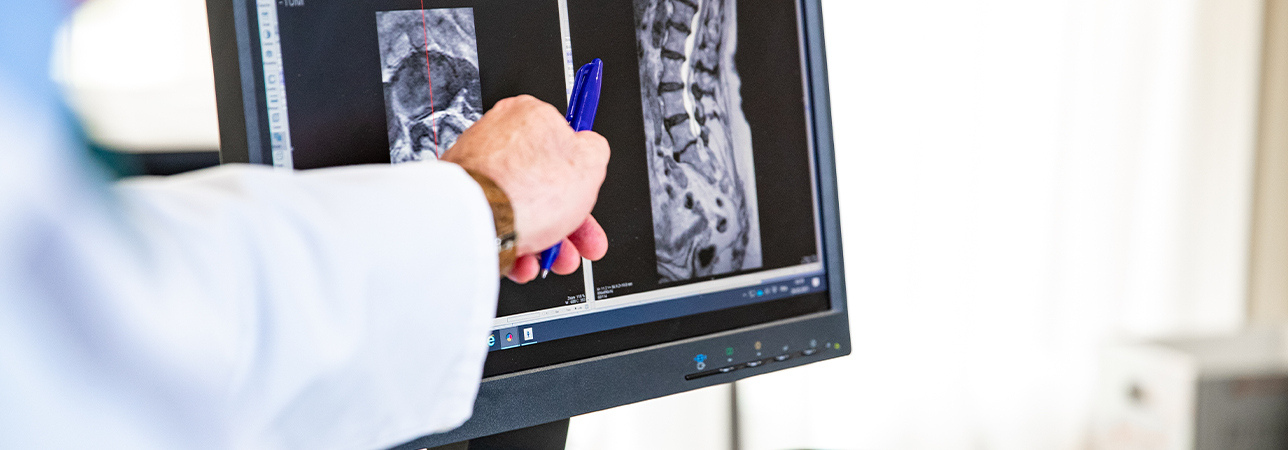
Lumbar MRI is the gold standard test.
It must be ordered urgently when low back pain or lumbosciatica is associated with:
new-onset urinary or bowel disturbances;
altered perineal, genital, or “saddle” sensation;
bilateral sciatica;
progressive motor deficit;
a rapidly progressing neurological picture.
In cases of clinical suspicion, the patient should be referred to an emergency department or a facility capable of performing an urgent MRI and promptly initiating a neurosurgical evaluation.
Treatment
When an MRI confirms significant cauda equina compression, treatment is generally surgical.
The goal is to rapidly decompress the nerve roots by removing the cause of the compression, such as a large herniated disc or severe stenosis.
Surgery aims to halt the progression of neurological damage and, when possible, promote the recovery of impaired functions. Recovery can vary and depends primarily on the severity and duration of symptoms prior to decompression. International neurosurgical guidelines recommend surgical decompression as the primary treatment in cases confirmed by MRI.
The Role of the Primary Care Physician
The primary care physician plays a central role in early recognition.
Many patients with lumbosciatica are initially evaluated outside the hospital setting. In this context, the most important thing is to distinguish common sciatica from a possible early cauda equina syndrome.
This requires specific questions, as the patient may not spontaneously report urinary, bowel, or sexual disturbances, or changes in perineal sensation.
When in doubt, it is safer to initiate an urgent referral process rather than simply monitoring the patient’s progress.
Practical guidance for the referring physician
- Consider cauda equina syndrome in cases of low back pain or lumbosciatica associated with urinary, bowel, sexual, or perineal sensory disturbances.
- Do not wait for complete urinary retention: even a change in the urinary stream, bladder emptying, or sensation during urination may be significant.
- Bilateral sciatica, especially when associated with motor deficits or sensory disturbances, should be considered a warning sign.
- “Saddle” sensory loss is a key symptom and must be actively investigated.
- If cauda equina is suspected, the patient must be urgently referred for a lumbar MRI and neurosurgical evaluation.
- An apparently reassuring clinical examination does not always rule out early-stage cauda equina.
- Time is an important prognostic factor: early referral can reduce the risk of permanent deficits.

