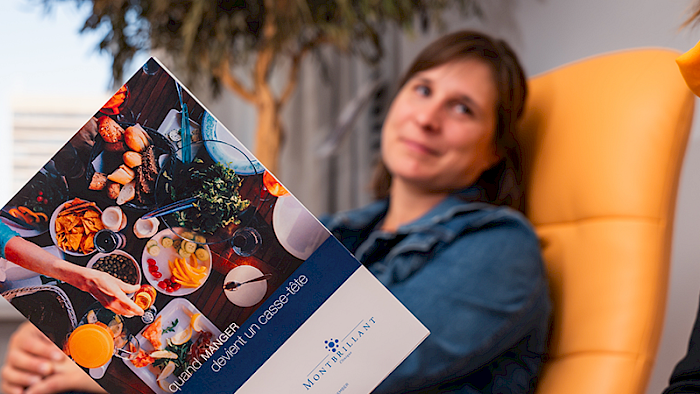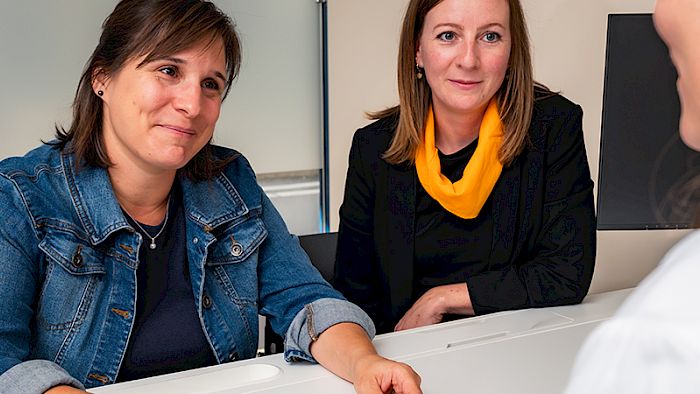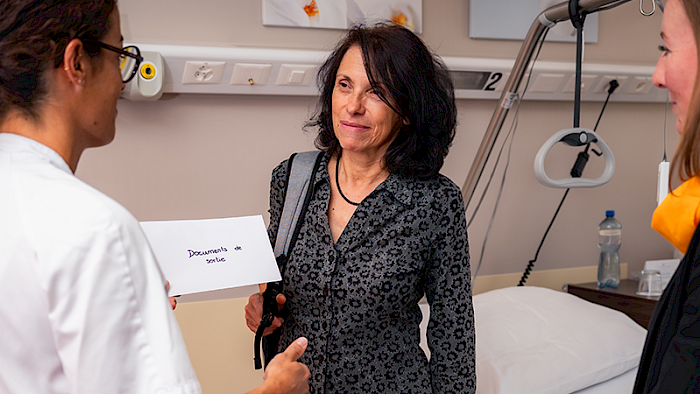
The better you understand your condition, the easier it is to make decisions and come to terms with changes.
Example: Ask what factors might make your symptoms better or worse.

This post is part of our series on International Patient Safety Week 2026, which focuses on non-communicable diseases. You can find all the posts from this week here: Blog.
Taking an active role in your own health often starts with small steps in everyday life:
Research into self-management identifies various areas in which patients can actively influence their health (Lorig & Holman, 2003):
The better you understand your condition, the easier it is to make decisions and come to terms with changes.
Example: Ask what factors might make your symptoms better or worse.
Your personal goals and circumstances are important when planning your treatment.
Example: Discuss what matters most to you, such as greater mobility, less pain or being able to cope better with the demands of everyday life.
Spotting changes early on helps you and your treatment team to respond in good time.
Example: Make a note of any symptoms, pain, sleep quality or your energy levels in your day-to-day life.
Good health is not just achieved in the doctor’s surgery, but above all in everyday life.
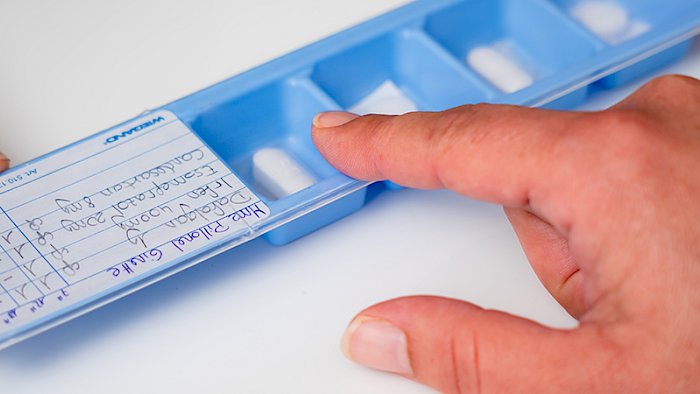
For example: regular exercise, getting enough sleep, taking medication as prescribed, or deliberately scheduling periods of rest can all make an important contribution.
Good decisions are based on a shared understanding.
Example: Ask yourself and your treatment team: what options are available to you, whether there are any pros and cons, and which option best suits your personal situation.
Patient empowerment does not mean doing everything perfectly. It means actively getting involved and developing yourself, one step at a time. Every question, every conscious decision and every action that promotes good health can help to improve your quality of life.
Why not ask yourself the following question in your day-to-day life:
‘What can I do today to have a positive impact on my health or well-being?’
It is often the small, regular steps that make the biggest difference in the long run.
Patient empowerment is a central component of modern integrated care. Successful treatment is not achieved through medical services alone, but through the interplay of specialist knowledge, shared decision-making and active self-management.
Patients are an important part of the treatment team.
But even the highest level of personal responsibility requires a system that does not look the other way at the crucial moment. Tomorrow, on Day 4, we’ll be looking at handover procedures – the moment that often determines the outcome of everything.
Barlow, J., Wright, C., Sheasby, J., Turner, A., & Hainsworth, J. (2002). Self-management approaches for people with chronic conditions: A review. Patient Education and Counseling, 48(2), 177–187. https://doi.org/10.1016/S0738-3991(02)00032-0
Barry, M. J., & Edgman-Levitan, S. (2012). Shared decision making—The pinnacle of patient-centered care. New England Journal of Medicine, 366(9), 780–781. https://doi.org/10.1056/NEJMp1109283
Bodenheimer, T., Lorig, K., Holman, H., & Grumbach, K. (2002). Patient self-management of chronic disease in primary care. JAMA, 288(19), 2469–2475. https://doi.org/10.1001/jama.288.19.2469
Coulter, A., Entwistle, V. A., Eccles, A., Ryan, S., Shepperd, S., & Perera, R. (2015). Personalised care planning for adults with chronic or long-term health conditions. Cochrane Database of Systematic Reviews, (3), CD010523. https://doi.org/10.1002/14651858.CD010523.pub2
Dineen-Griffin, S., Garcia-Cardenas, V., Williams, K., & Benrimoj, S. I. (2019). Helping patients help themselves: A systematic review of self-management support strategies in primary health care practice. PLoS ONE, 14(8), e0220116. https://doi.org/10.1371/journal.pone.0220116
Greene, J., & Hibbard, J. H. (2012). Why does patient activation matter? An examination of the relationships between patient activation and health-related outcomes. Journal of General Internal Medicine, 27(5), 520–526. https://doi.org/10.1007/s11606-011-1931-2
Kangovi, S., Mitra, N., Norton, L., Harte, R., Zhao, X., Carter, T., Grande, D., Long, J. A., Asch, D. A., & Shannon, R. (2018). Effect of community health worker support on clinical outcomes of low-income patients across primary care facilities: A randomized clinical trial. JAMA Internal Medicine, 178(12), 1635–1643. https://doi.org/10.1001/jamainternmed.2018.4630
Lorig, K. R., & Holman, H. (2003). Self-management education: History, definition, outcomes, and mechanisms. Annals of Behavioral Medicine, 26(1), 1–7. https://doi.org/10.1207/S15324796ABM2601_01
Schweizerische Gesellschaft für Ernährung. (2024). Schweizer Ernährungsempfehlungen für Erwachsene. Bern: SGE.
Bundesamt für Gesundheit. (2026). Nichtübertragbare Krankheiten (NCD): Prävention und Gesundheitsförderung. Bern: BAG.
Bundesamt für Lebensmittelsicherheit und Veterinärwesen. (2025). Schweizer Ernährungsstrategie 2025–2032. Bern: BLV.
World Health Organization. (2025). Health literacy. Geneva: World Health Organization.
World Health Organization. (2025). Noncommunicable diseases. Geneva: World Health Organization.
World Health Organization. (2026). Self-care for health and well-being. Geneva: World Health Organization.
WHO Regional Office for Europe. (2023). Therapeutic patient education: An introductory guide. Copenhagen: WHO Regional Office for Europe.